The General Laboratory provides a facility where studies on thermal conversion technologies—including pyrolysis, gasification, and combustion—can be conducted, and where systems operating with these technologies can be observed and examined in practice. Within the scope of the ÇEV306 Biological Processes course, a laboratory-scale bioreactor representing an activated sludge system is introduced to students, and the fundamental principles of biological treatment are demonstrated through hands-on learning.
The laboratory also serves as a physical environment that enhances the effectiveness of courses related to air pollution and its control (such as ÇEV457 Air Pollution Control). During laboratory sessions, students have the opportunity to observe and examine air pollution control equipment in operation. Additionally, the laboratory is used for research focusing on air pollution generated from energy production processes, housing combustion, gasification, and pyrolysis systems for this purpose.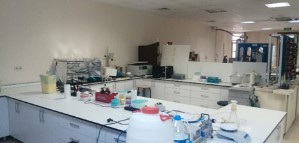
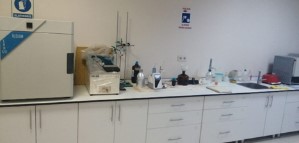
The laboratory is equipped with a fluidized bed combustion system (Lab-FBC) that is 2 meters in height and has an inner diameter of 10 cm, as well as a pyrolysis and gasification system consisting of a feeding unit, reactor, and condensation components. The laboratory also includes a laboratory-scale Photobioreactor System (Lab-PBR) designed to investigate the CO₂ capture efficiencies of microalgae cultures.
In addition, the laboratory is supported by a variety of auxiliary equipment used during experiments, including precision and standard balances, sieve sets, drying ovens, and high-temperature muffle furnaces.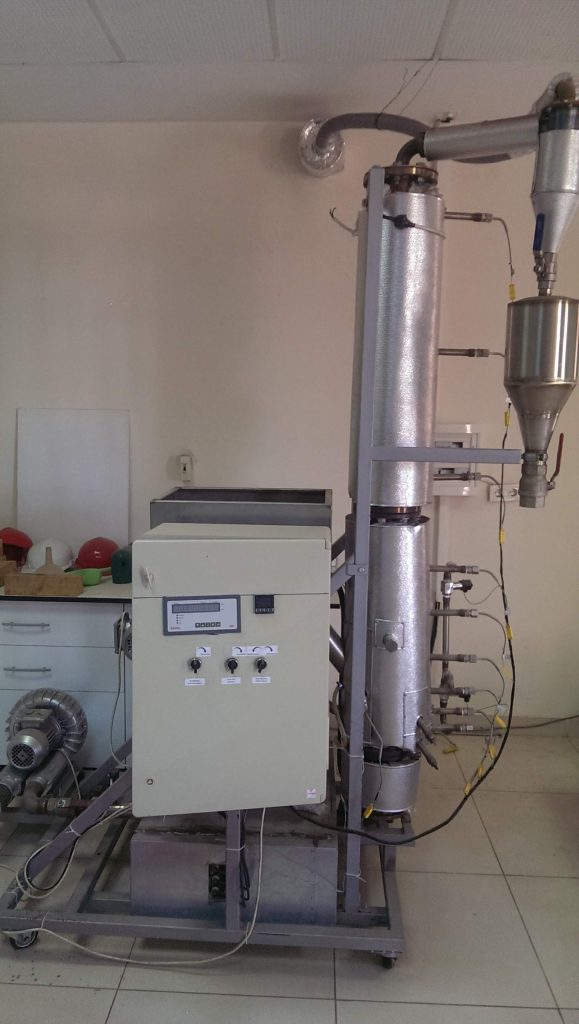
Laboratory-Scale Bubbling Fluidized Bed Combustion System (Lab-BFBC) 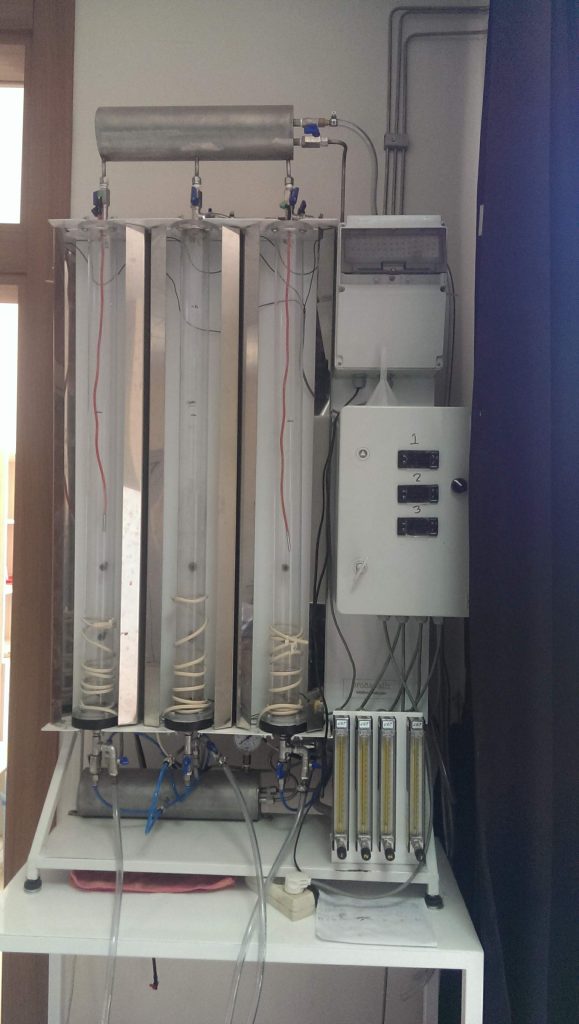
Laboratory-Scale Photobioreactor System (Lab-PBR)
The scientific research conducted in the General Laboratory can be summarized as follows:
- Optimization of valuable product recovery through waste pyrolysis
- Evaluation of the biological treatability of industrial wastewater
- Activated sludge toxicity tests
- Aerobic sludge stabilization studies
- Advanced biological wastewater treatment experiments
- Air pollution and control
- Clean energy production from biomass
- CO₂ capture technologies
With the infrastructure described above, the General Laboratory has supported and completed a substantial number of research studies since 2016, including 1 TÜBİTAK (Initial R&D) Project, 2 doctoral dissertations, 16 master’s theses, and 5 TÜBİTAK-supported capstone projects.
Son güncelleme : 19.11.2025 14:15:19